In traditional Chinese colors, there lies the aesthetic sensibility of the Chinese people and the profound cultural heritage of ancient China. "Mountains and waters blend with hues of vermilion, while mist and clouds drift in shades of purple and green." Poets use colors to present a hazy, drizzly landscape before the eyes. Color is a way to understand the world, and traditional Chinese colors are deeply rooted in life, reflecting the inner self and conveying the pinnacle of Eastern aesthetics.
1、The return of the mysterious bird

Originating from the autumn half of lotus root silk, lotus root silk white with autumn colors is not only a popular clothing color in the Tang Dynasty, but also the color of peonies in the Qing Dynasty. Inheriting the saying 'the setting sun shines with the setting smoke', it is not related to the world, but can wait for the wind and moon. Instead, it is called "Red Vine Staff", whose color is based on the widely distributed branches of the Chinese vine, and it is still used as a raw material for making rattan utensils to this day. In line with the 'Purple Mouse', its color is based on the fur color of the mink in northern China. Even now, it is still very valuable. Compared to the barbarism of leaving fur, it is better to preserve the inheritance of color.
2、The water is starting to dry up
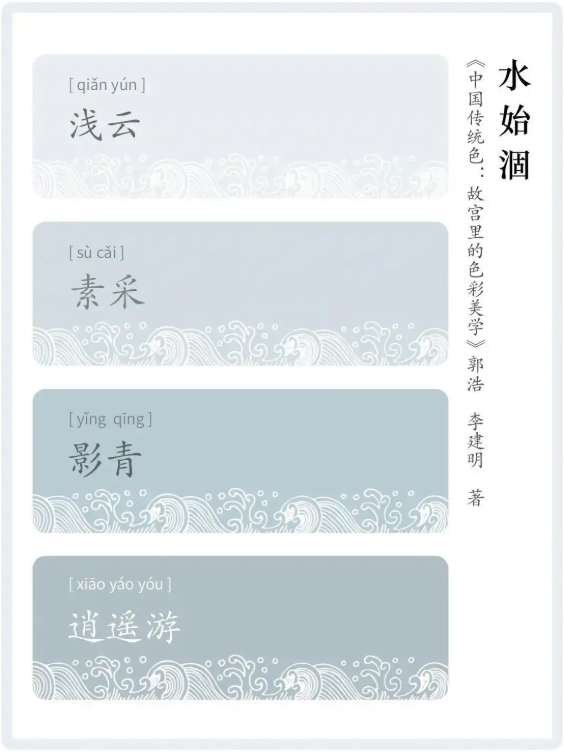
Originating from "Shallow Cloud", Shu Jian is a famous traditional color derivative, not only Xue Tao Jian, but also Xie Gong Jian. According to the production process, Shallow Cloud belongs to the silver white color with a light blue tone. Inheriting the colors of "Su Cai" and "Bo Jian Su Cai Han Qiu Jing", the reflection color of clear autumn moonlight shining on the water surface or other surfaces. Turning to 'shadow green', thin and transparent visible shadows, microscopic visible green, indescribable beauty. In line with the colors of "carefree travel" and "the sky is filled with clouds and qi", it is free and unrestrained, with vitality soaring to the sky.
3、Cool breeze to
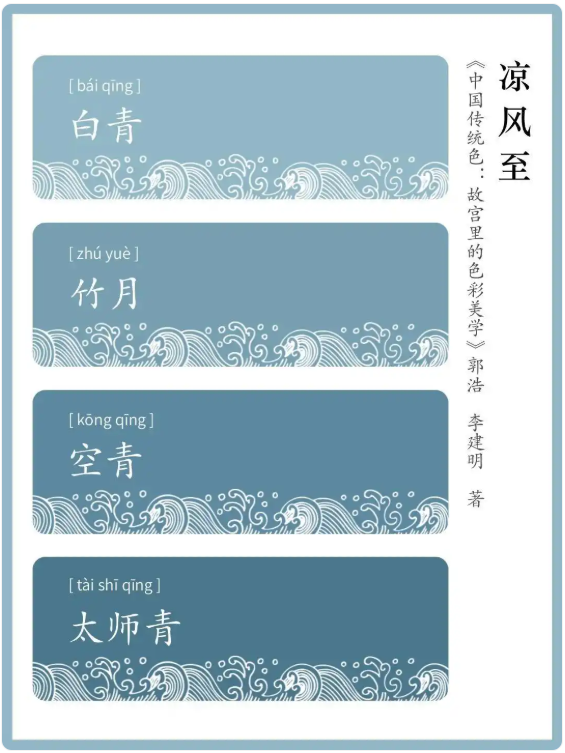
Originating from "Bai Qing", Shi Qing belongs to the stone color system of Chinese painting pigments. It is divided into head green, second green, third green, and fourth green according to color categories, and into mineral categories such as Bai Qing, Kong Qing, Zeng Qing, and Qun Qing. Inheriting the concept of "bamboo moon", Chinese painting includes "bamboo moon painting" and so on. When painting the color of bamboo moon, painting the moon is like painting bamboo, and painting bamboo prints the color of the moon. Turning to 'empty green', according to the theory of mineral identification, those with pulp are called empty green, while those without pulp are called white green. In line with the saying 'Tai Shi Qing', 'If you want to ask about the blue sky and water in the palace, everyone will only say Tai Shi Qing', Cai Jing Tai Shi Qing and palace maid Tian Shui Qing went with Bianliang.
4、Plants and trees turn yellow and fall
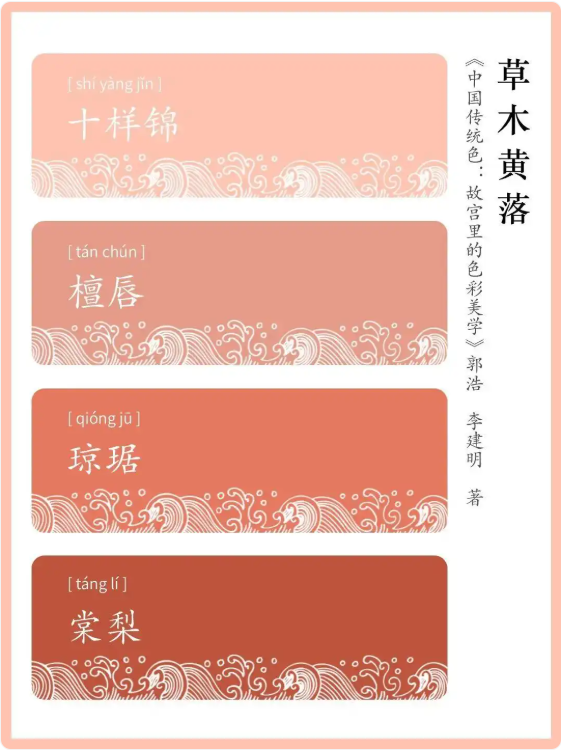
Originating from the "Ten Types of Brocade", famous traditional color products include not only Shu Jian but also Shu Brocade. The process of forming Chinese traditional colors from the name of the brocade to the name of the color in the Ten Types of Brocade. Inherit the "sandalwood lips", light blue clothes, apricot yellow blessing, and sandalwood lipstick? Turning to 'Qiongju', Kong Yingda explained that the word 'Qiongju' does not mean 'jade' in its original name, but rather 'beautiful jade'. The original meaning of Qiong's jade name is' red jade with a cinnabar color '. In line with the concept of "tangli", tangli is indeed a fruit, but when we talk about its color, we are referring to its leaves, which are withered and not the most beautiful until the end.
5、Eagles are sacrificial birds
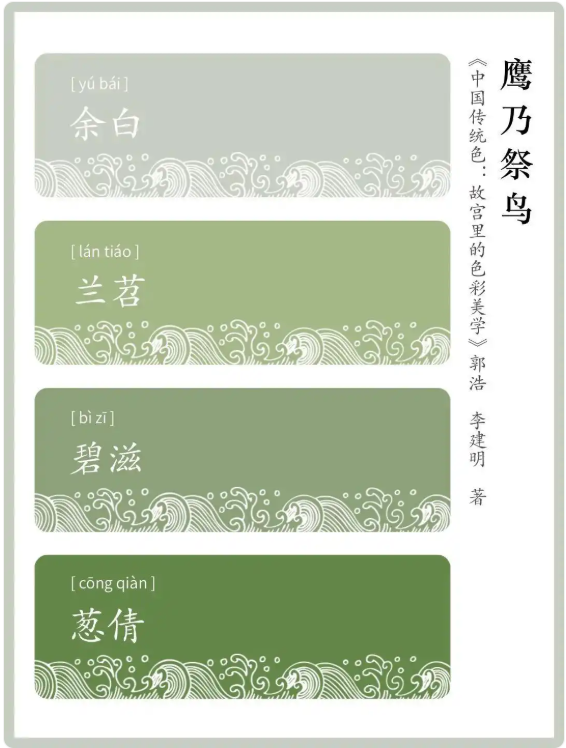
Originating from "Yu Bai", the white color is translucent with a green fish belly, and the light fades away with a faint green color across the water. This color has a great visual effect. Inheriting the "orchid tea", it comes out in the same frame as jade, leaving a fragrance on the lips and teeth when it enters. Whether it is orchid leaves or green polished rice, they are not vulgar. Turning to 'Bizi', Li Taibai always stands out. The Songhua color mentioned earlier and the Bizi color here can be summarized in one sentence: 'Light as Songhua falling golden powder, thick as moss containing Bizi'. In line with the concept of 'scallion beauty', green mountains give rise to alleys, and alleys and mountains are lush with greenery.
These classic color schemes not only led the fashion trend in ancient times, but also emit charming radiance even when traveling through time and space to modern times, providing us with a constant source of inspiration for our dressing and design.


